Home visits planned by zone and capacity, not by Word.
A healthcare company runs home-care services for hospitals in Saudi Arabia. Nurses' days were planned in Excel rosters and Word schedules. We built the platform that plans every visit, puts it on the nurse's phone and reports back to the hospital's own records.
A roster in Excel. A schedule in Word.
Office staff built each day by hand. A change after printing meant phone calls.
During the day nobody could see which visit was running late, and what happened at the patient's home reached the hospital's records only when someone typed it in again.
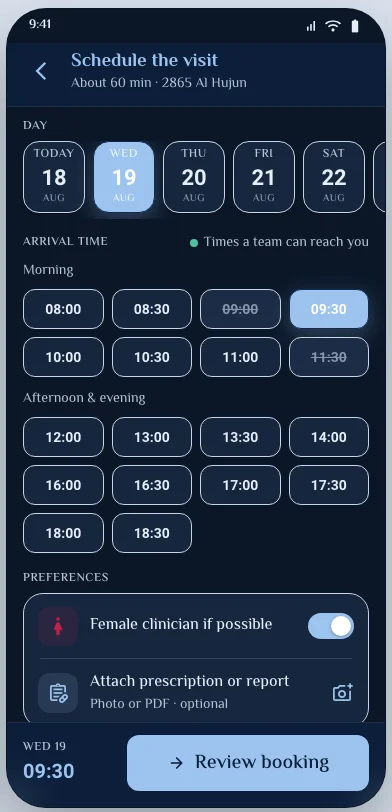
Plan by zone, by capacity, by length of visit.
Staff create a visit from the patient's hospital file number. The scheduler places it by zone, by how many visits each nurse can carry, and by how long that kind of visit takes.
Around the scheduler:
- One staff appNurses, doctors, physiotherapists and drivers see their day, navigate to it and close each visit.
- Supervisor boardLate visits raise an alert. A supervisor can reassign or override on the spot.
- Hospital recordsPatients are fetched by file number, insurance approvals checked, and finished visits written back.
- PatientsText messages before and around the visit, in Arabic or English.
- Pharmacy and suppliesMedication and supply orders delivered on the same platform.
- SecurityTwo-step sign-in for office accounts, and an audit of who saw what.
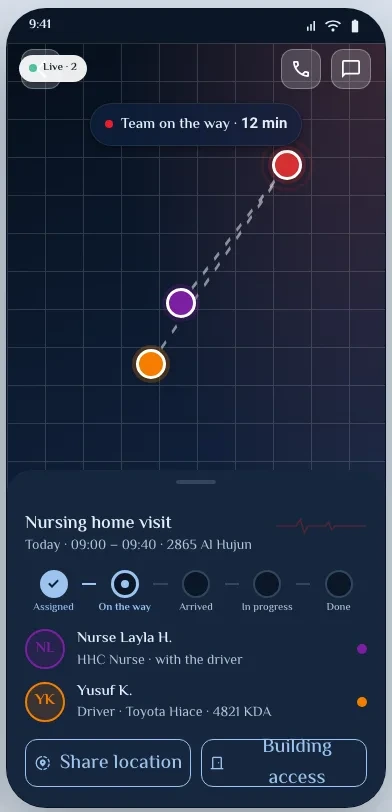
The day is visible while it happens.
Supervisors see a late visit when it becomes late, not the next morning. The hospital's own system knows a visit took place without anyone typing it twice.
Two hospital groups run on it today.